Grain Store
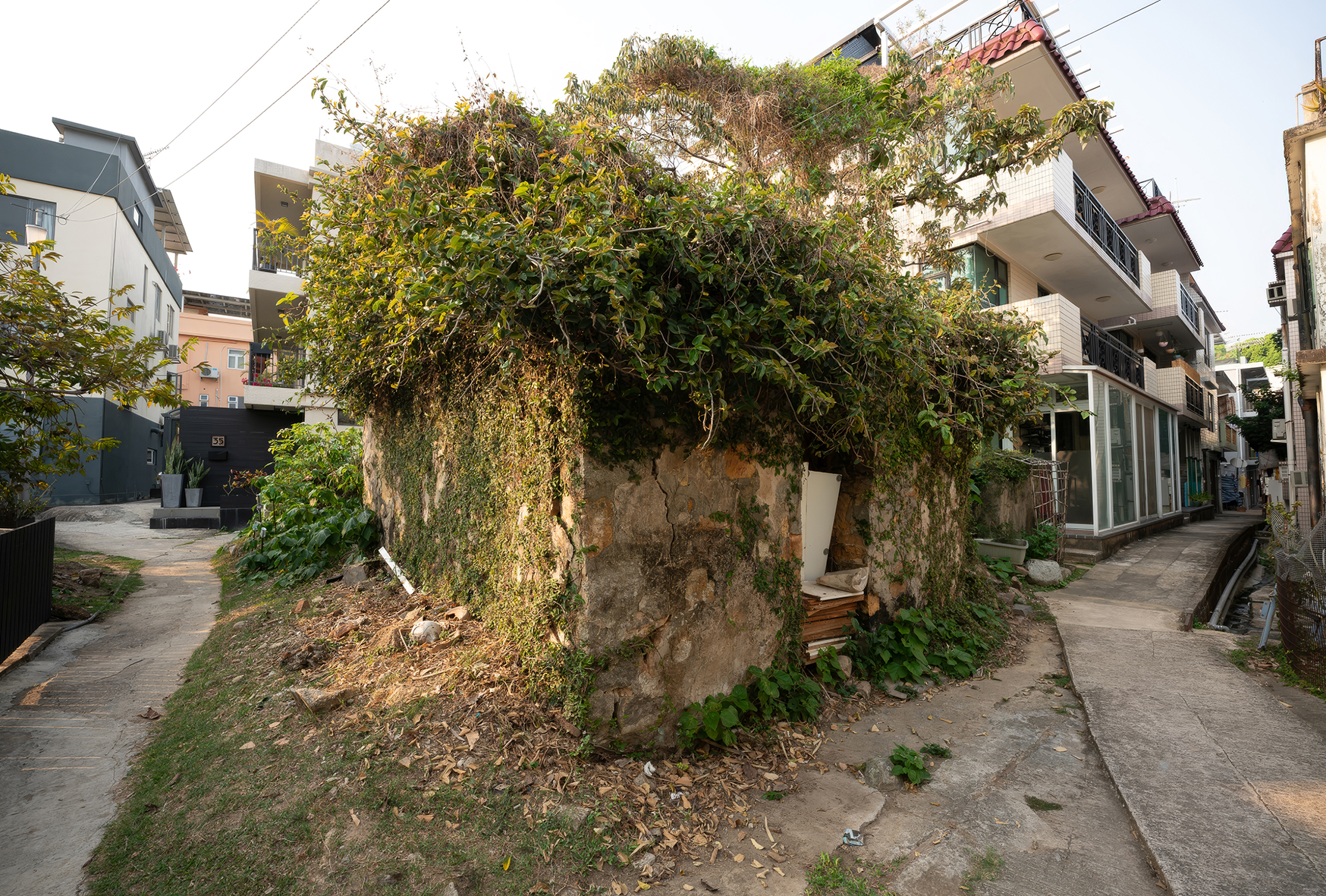
The Grain Store has a history of over 100 years, primarily used for storing crops and farming
tools. These structures were typically constructed from stone and yellow mud, smaller in
scale than residential houses but sturdily built. The roof was tiled in a simple and functional
manner. The Chinese University of Hong Kong has undertaken the revitalisation of the Grain
Store to revive the agricultural traditions of Shui Hau.
From the 1970s onward, agricultural activity in Shui Hau gradually declined. The Grain Store, having long been unused, eventually fell into disrepair, with both its roof and walls having collapsed.
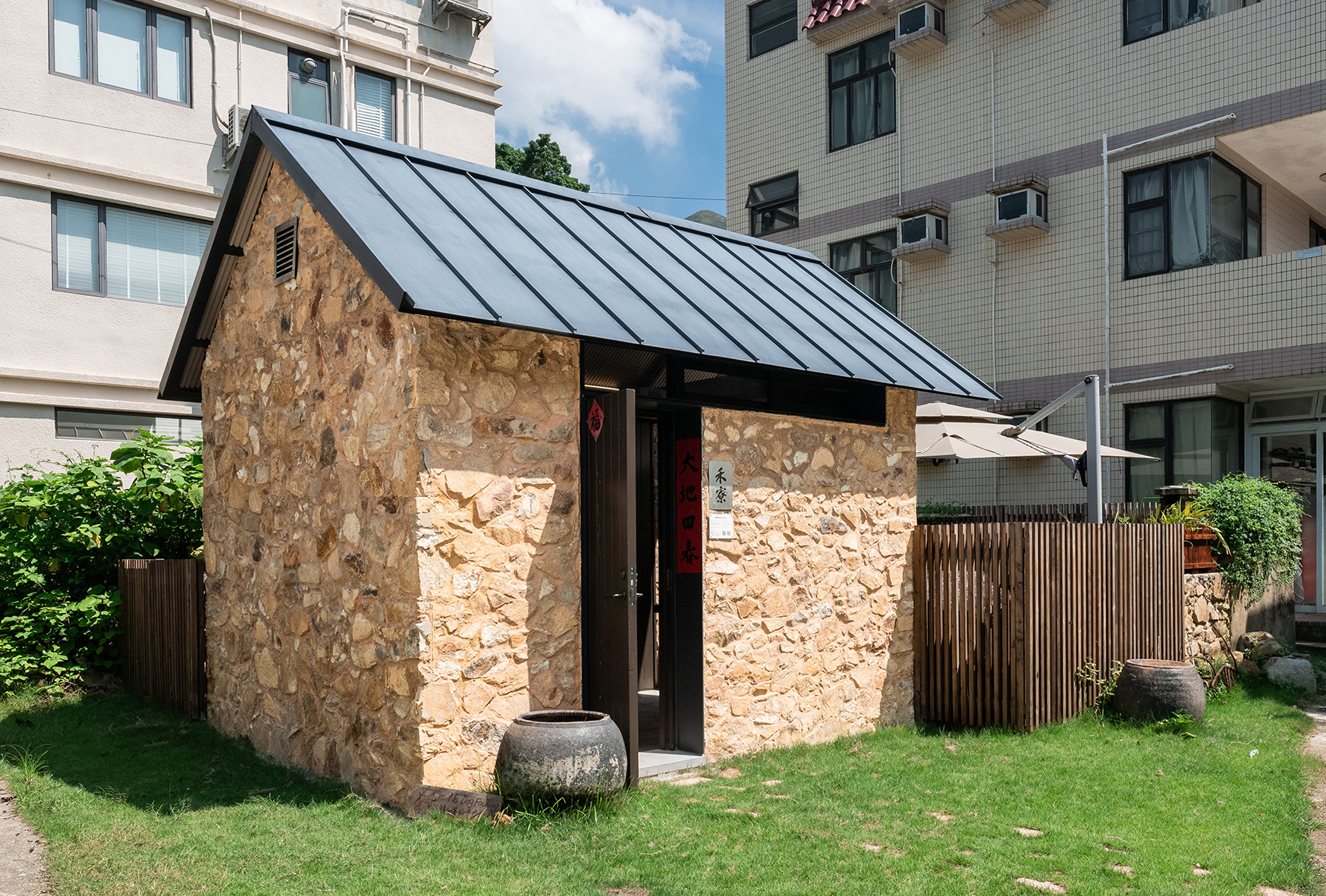
As one of the few remaining stone-and-mud huts in Shui Hau, the Grain Store features a highly distinctive stone wall structure. The original walls were constructed by the villagers using stones collected from the hillside behind the village, stacked together with mud. During the restoration, stones from the original site were carefully collected and reused, combining traditional materials such as yellow mud with modern construction techniques to rebuild the walls. The reconstructed Grain Store incorporates an agricultural co-operative, serving as a space for showcasing traditional farming tools and hosting agricultural culture workshops.

1. Main entrance2. Stone wall3. Garden4. Part of the original wall
5. Accordion door6. Steel structure7. Insulation & wooden false ceiling8. Aluminium roof
To fit the Grain Store for modern needs, a lightweight aluminium roof was installed to replace the original tiled roof. This helps protect the stone walls from wind and rain, preventing long-term moisture damage, and improving the building’s overall stability and durability.
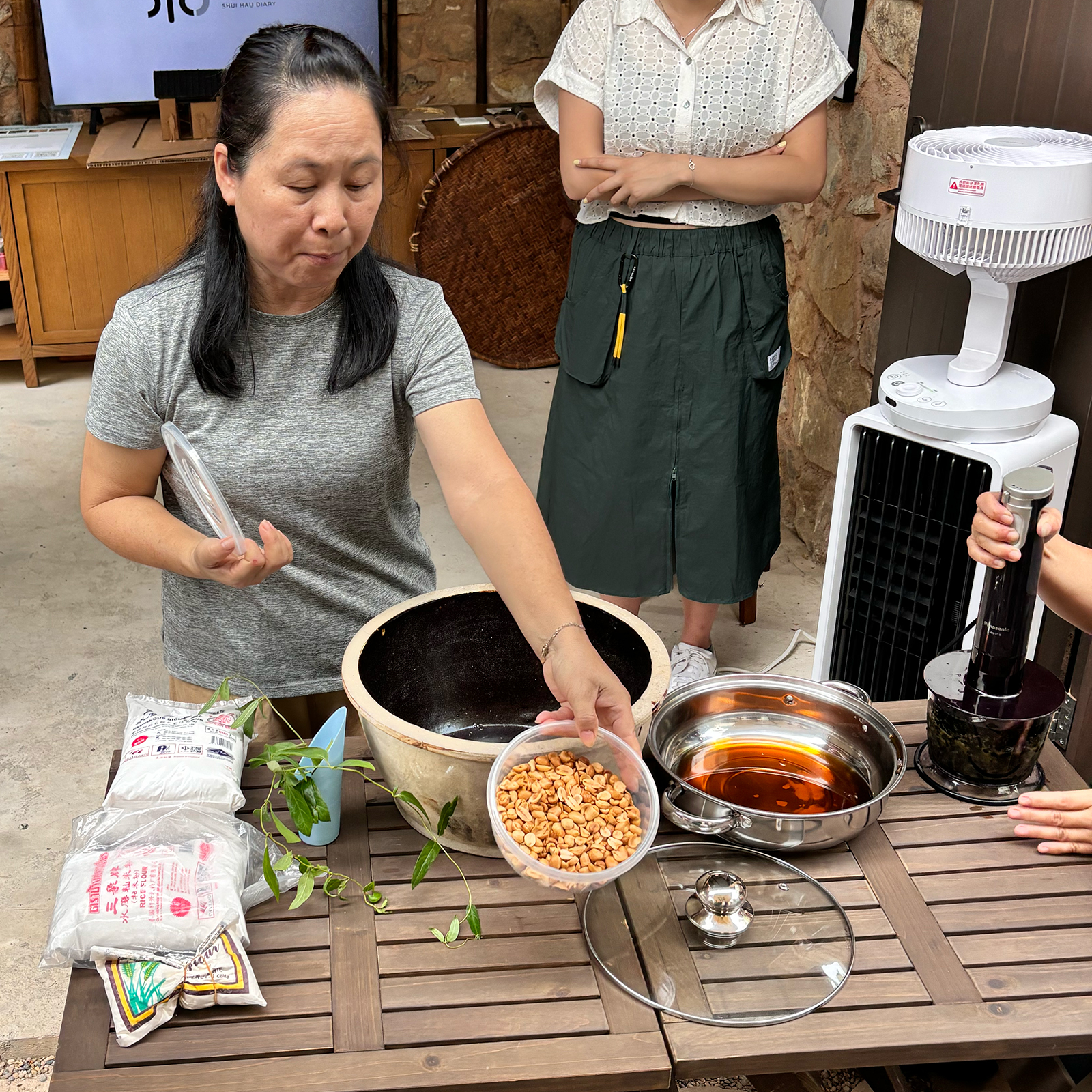
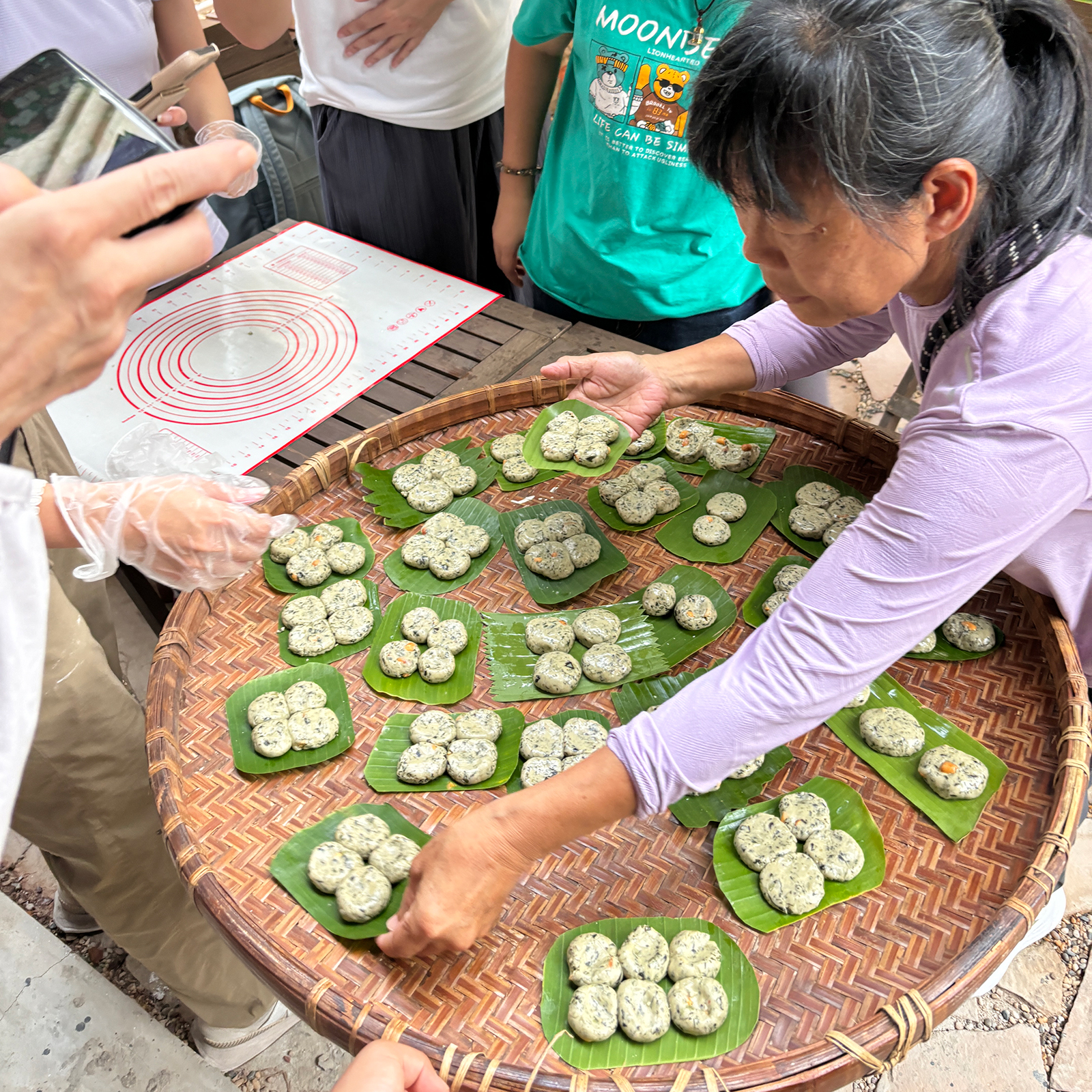
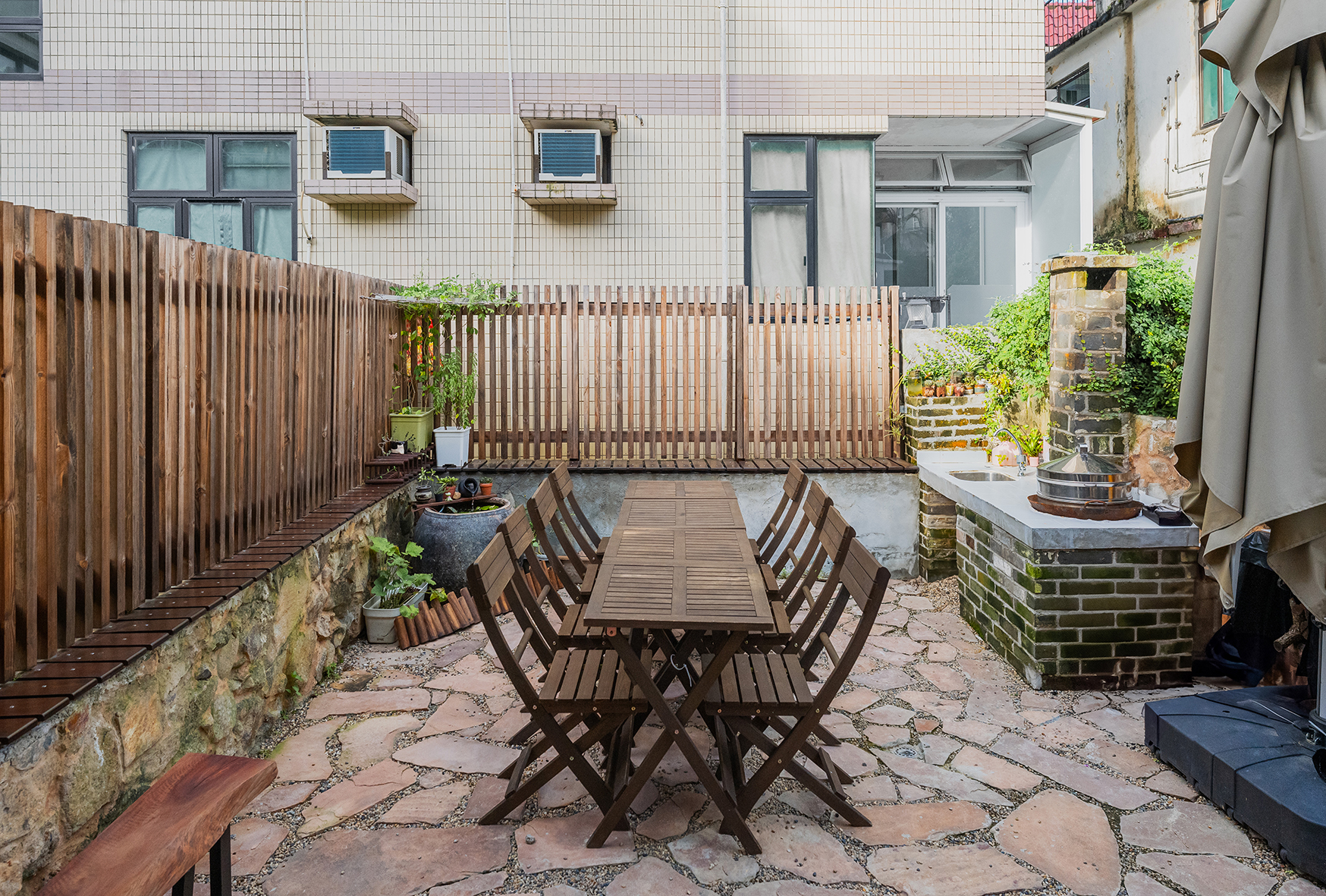
Innovative elements have been incorporated into the design. The indoor space now extends into a newly paved stone courtyard, with the original interior wall replaced by a bi-fold door that can be fully opened to connect the interior and exterior areas. This flexible layout is well-suited for hosting workshops. The courtyard features a traditional firewood stove, used for demonstrations such as making cha guo and lai wok pin. Through this reinterpretation, the Grain Store has been imbued with renewed cultural significance and vitality as a community space.
Innovative elements have been incorporated into the design. The indoor space now extends into a newly paved stone courtyard, with the original interior wall replaced by a bi-fold door that can be fully opened to connect the interior and exterior areas. This flexible layout is well-suited for hosting workshops. The courtyard features a traditional firewood stove, used for demonstrations such as making cha guo and lai wok pin. Through this reinterpretation, the Grain Store has been imbued with renewed cultural significance and vitality as a community space.
Historically, villagers made their living primarily through farming. Those with larger
farmland usually owned their own grain store. The Grain Store is now owned by the two Chan
sisters. Bias for sons was a deeply rooted traditional value in the village, and their father’s
willingness to gift the property to his daughters represents a significant breakthrough in
traditional customs. This particular grain store once served as a temporary shelter for village
children as well as workers involved in the construction of Shek Pik Reservoir.
In the past, Shui Hau was primarily an agricultural village, with rice cultivation as the mainstay. Villagers would sell surplus produce
to residents of nearby Tai O or Cheung Chau,
and even export it as far as Hong Kong Island,
in exchange for daily necessities such as salt,
sugar and farming tools.
In addition to rice, they grew sweet potatoes, taro, spring onions and other crops, while also raising cattle, pigs, chickens and ducks, achieving a largely self-sufficient way of life.
In addition to rice, they grew sweet potatoes, taro, spring onions and other crops, while also raising cattle, pigs, chickens and ducks, achieving a largely self-sufficient way of life.
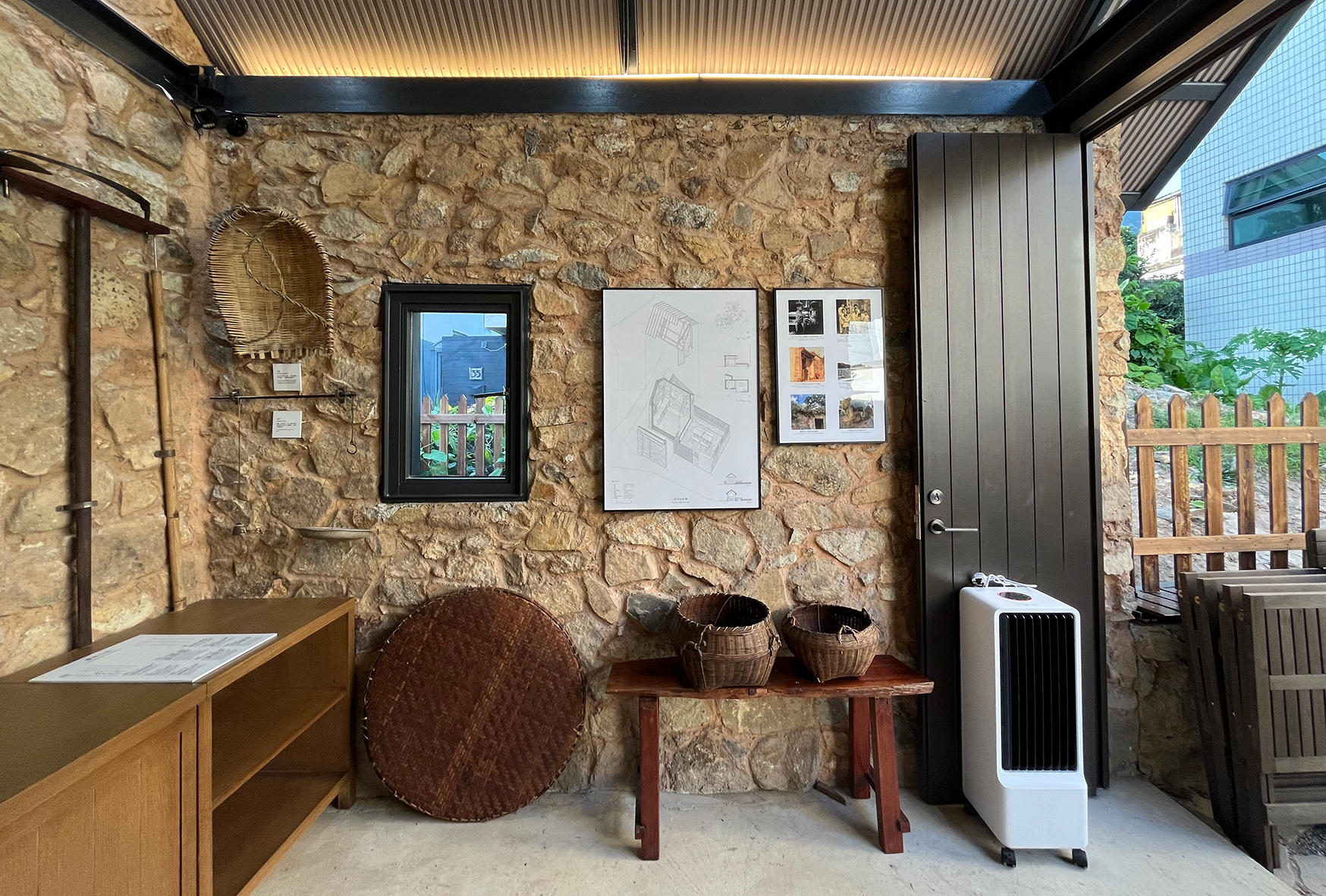
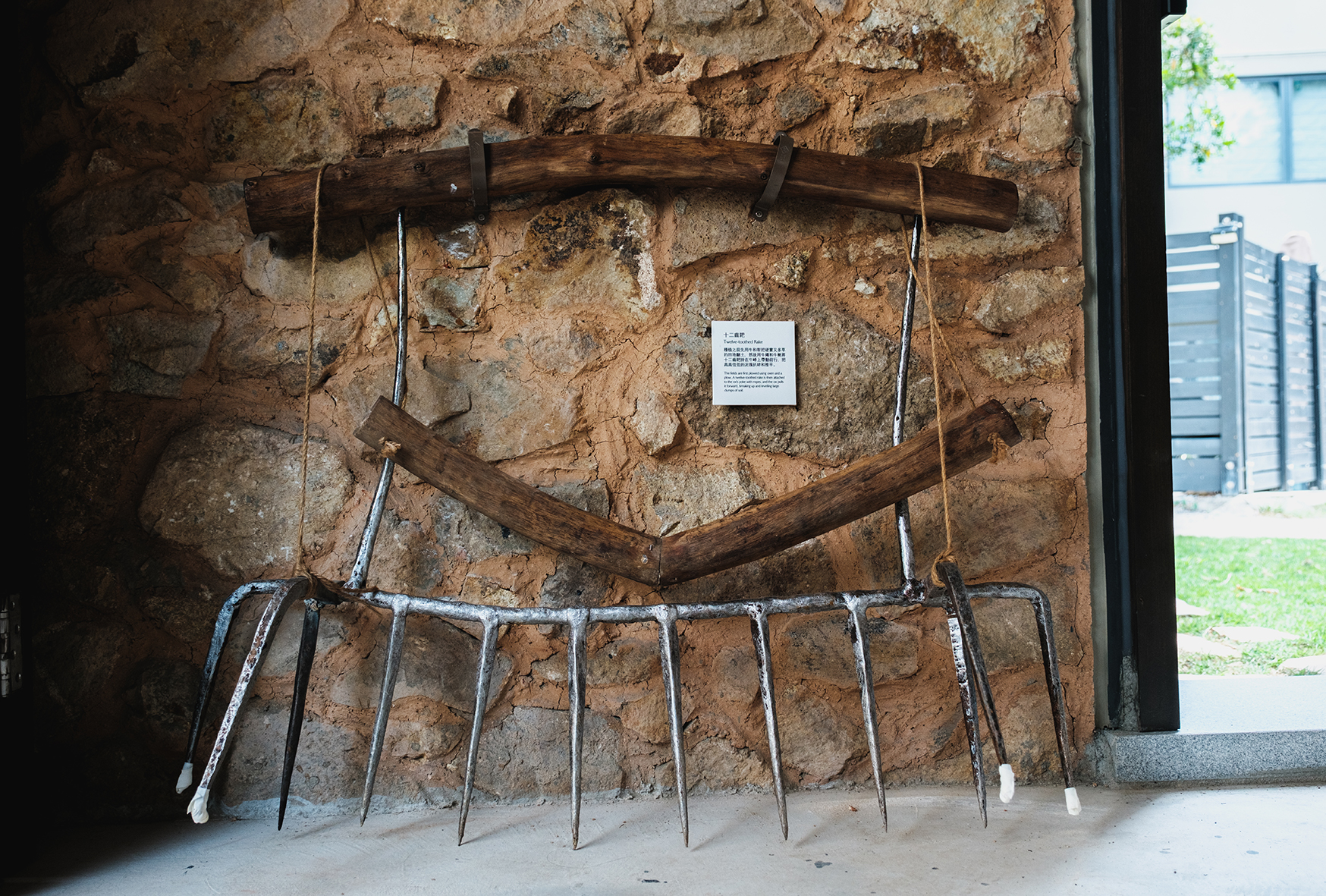
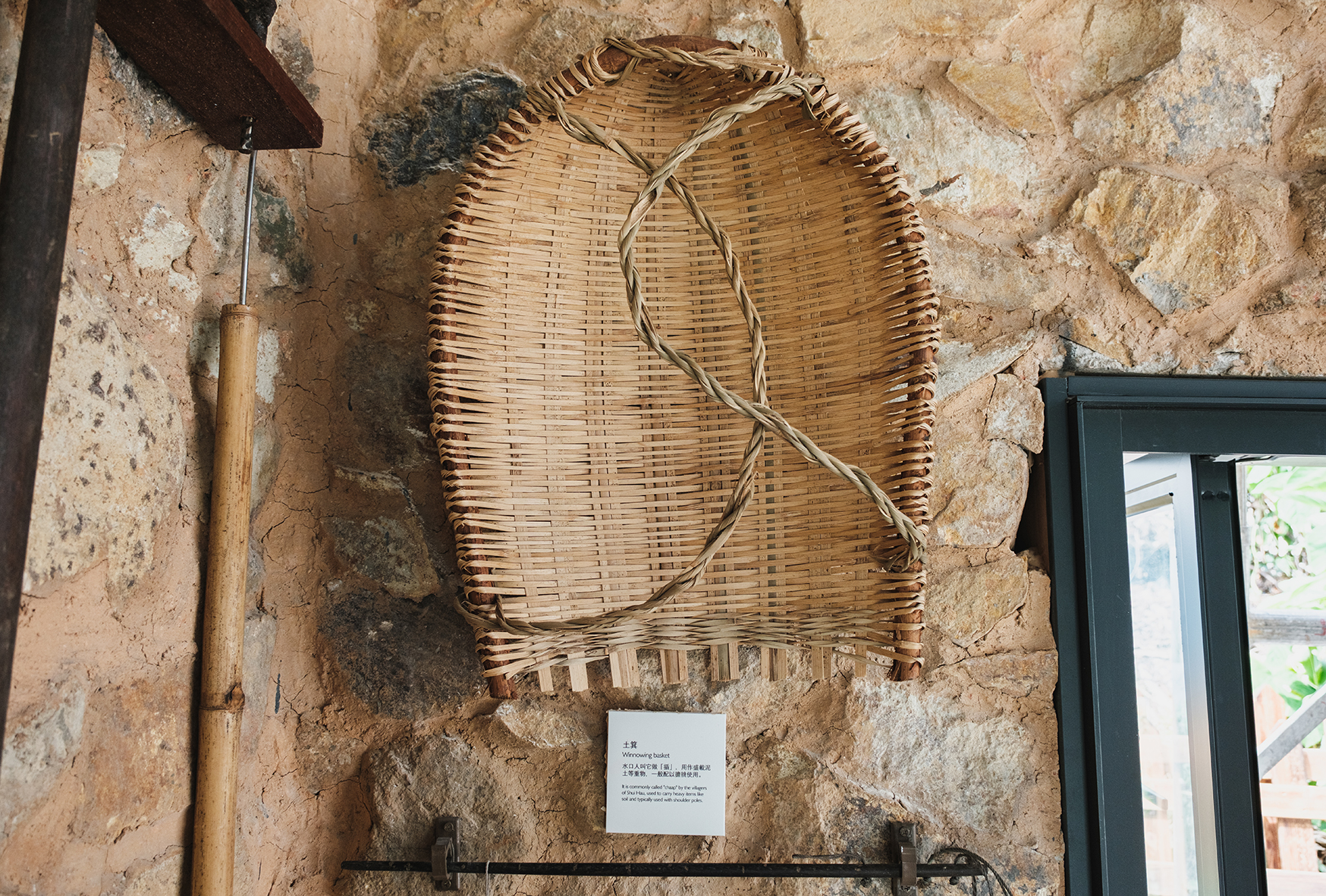
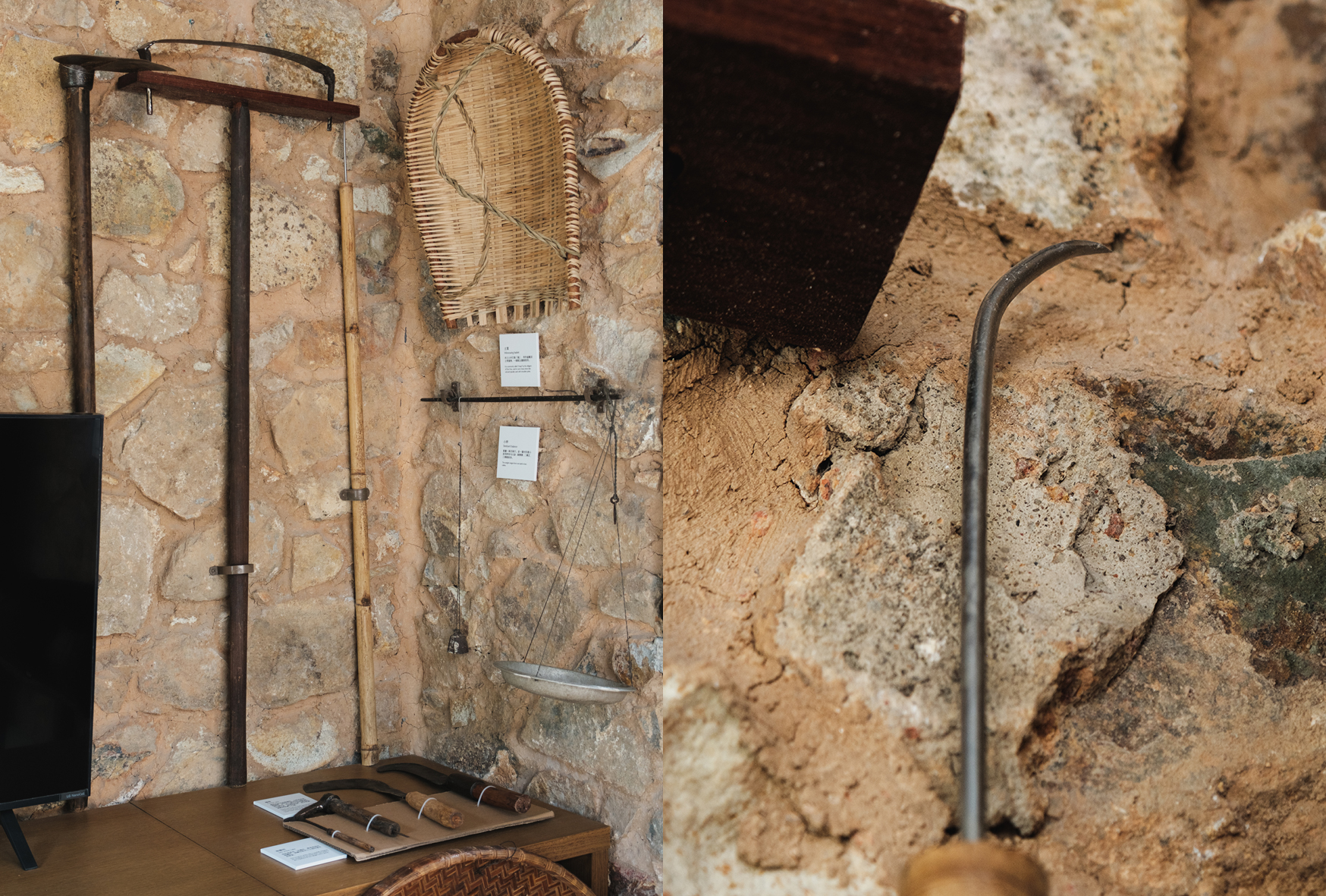
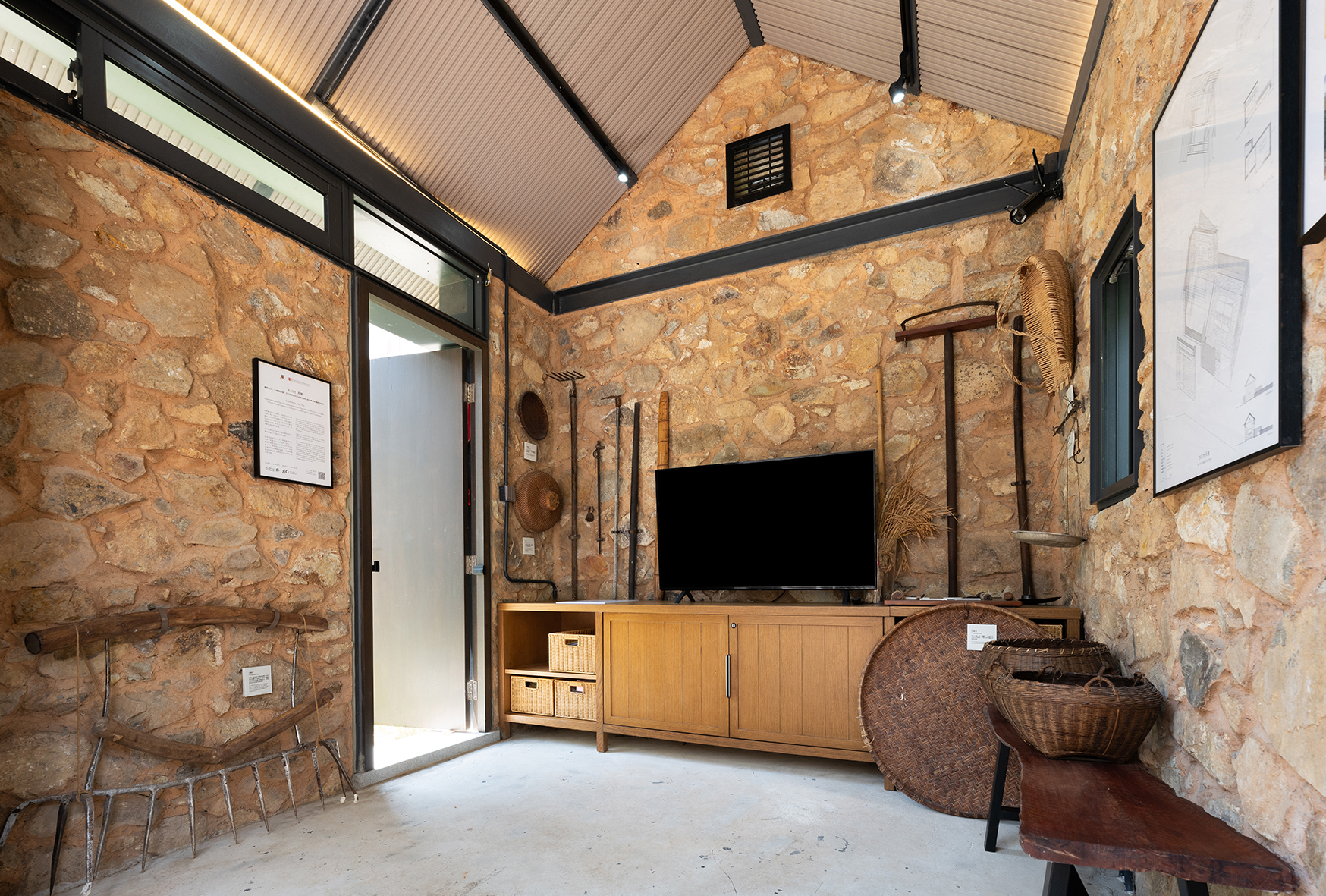
Inside the Grain Store, there are exhibition panels displaying farming tools and historical photographs from Shui Hau’s past agricultural life, along with highlights of the building’s
architectural features. At the same time, family photos of the owner, Mink Chan, taken during
her childhood with her siblings, are exhibited, presenting glimpses of her everyday life with
her brothers and sisters in the past.
The exhibition also showcases various farming tools, including ten-toothed rakes, bamboo baskets, scales and threshing baskets, highlighting the agricultural traditions of Shui Hau village.
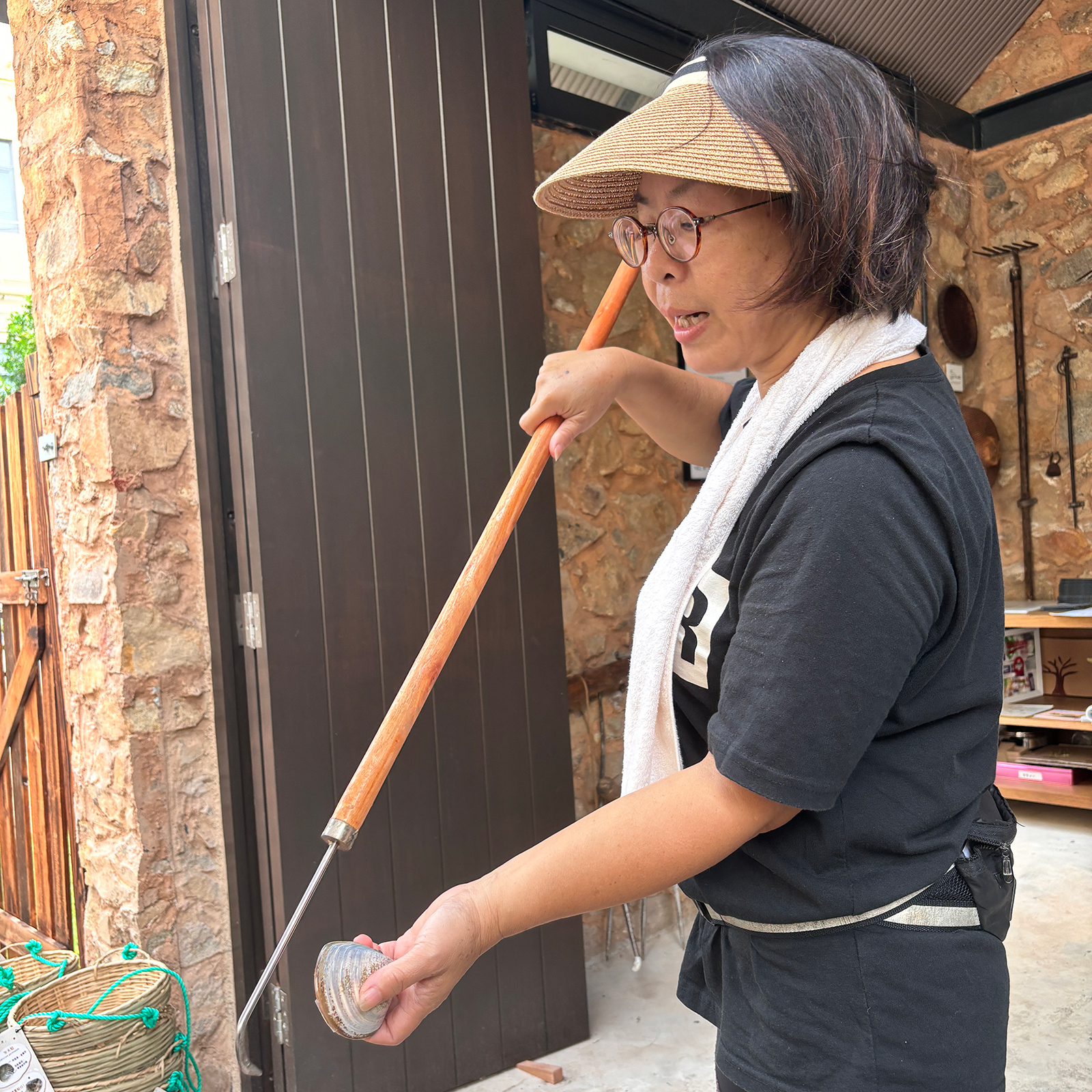
Notably, the clam sickle “chi hau sickle” is of particular significance. Shui Hau’s mudflat is rich in clams — a vital resource for villagers. The chi hau sickle consists of an iron hook fixed to a bamboo handle, specifically designed for digging up clams. Villagers first look for “clam eyes” — small dimples on the sand that indicate the presence of clams. They then insert the chi hau sickle into the sand. When the iron hook touches the shell, a distinctive sound and a subtle sensation through the tool allow them to pinpoint the clam’s exact location.
Today, many visitors come to the mudflats of Shui Hau to dig for clams. They often use wide rakes that disturb large areas of the sand and disrupt the mudflats’ ecology. In contrast, the chi hau sickle is considered an environmentally friendly tool, as it allows clams to be harvested only where they are suspected to be located, leaving the surrounding area undisturbed.
The Grain Store has been revitalised as an agricultural co-operative to preserving the unique
rural heritage of Shui Hau. Currently, house owner Mink Chan uses it as a platform for
dialogue between villagers and visitors, where people can drink tea and converse about the
everyday life and history of Shui Hau, and the space also serves as an exhibition venue.
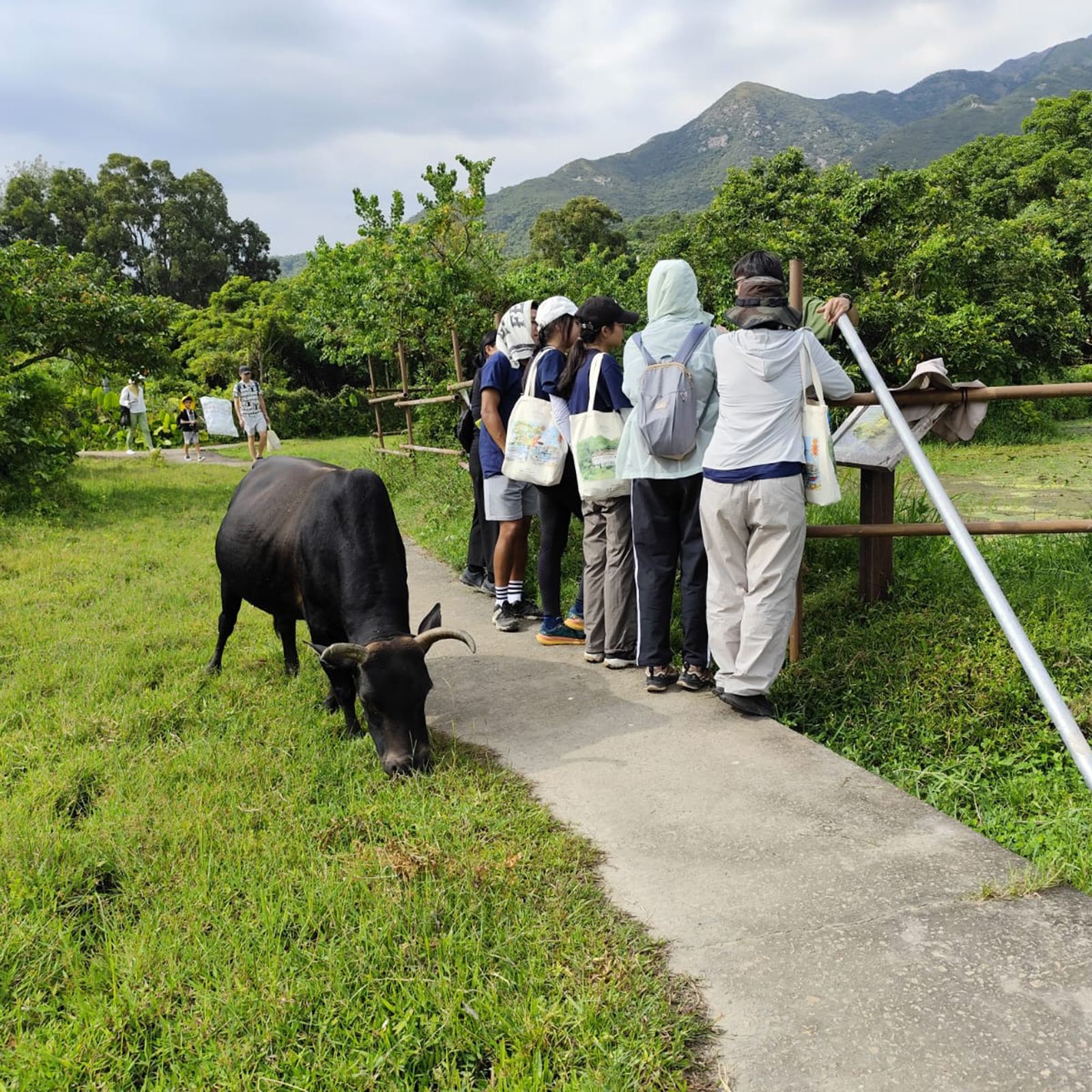
As part of the Regenerating Shui Hau project, the research team has collaborated with Mink Chan to jointly plan and organise agriculture-related workshops, allowing the public to participate hands-on, experience traditional farming and local culture, and rekindle the community atmosphere once found in the village, embodying the spirit of cultural preservation and collective participation.
As part of the Regenerating Shui Hau project, the research team has collaborated with Mink Chan to jointly plan and organise agriculture-related workshops, allowing the public to participate hands-on, experience traditional farming and local culture, and rekindle the community atmosphere once found in the village, embodying the spirit of cultural preservation and collective participation.